
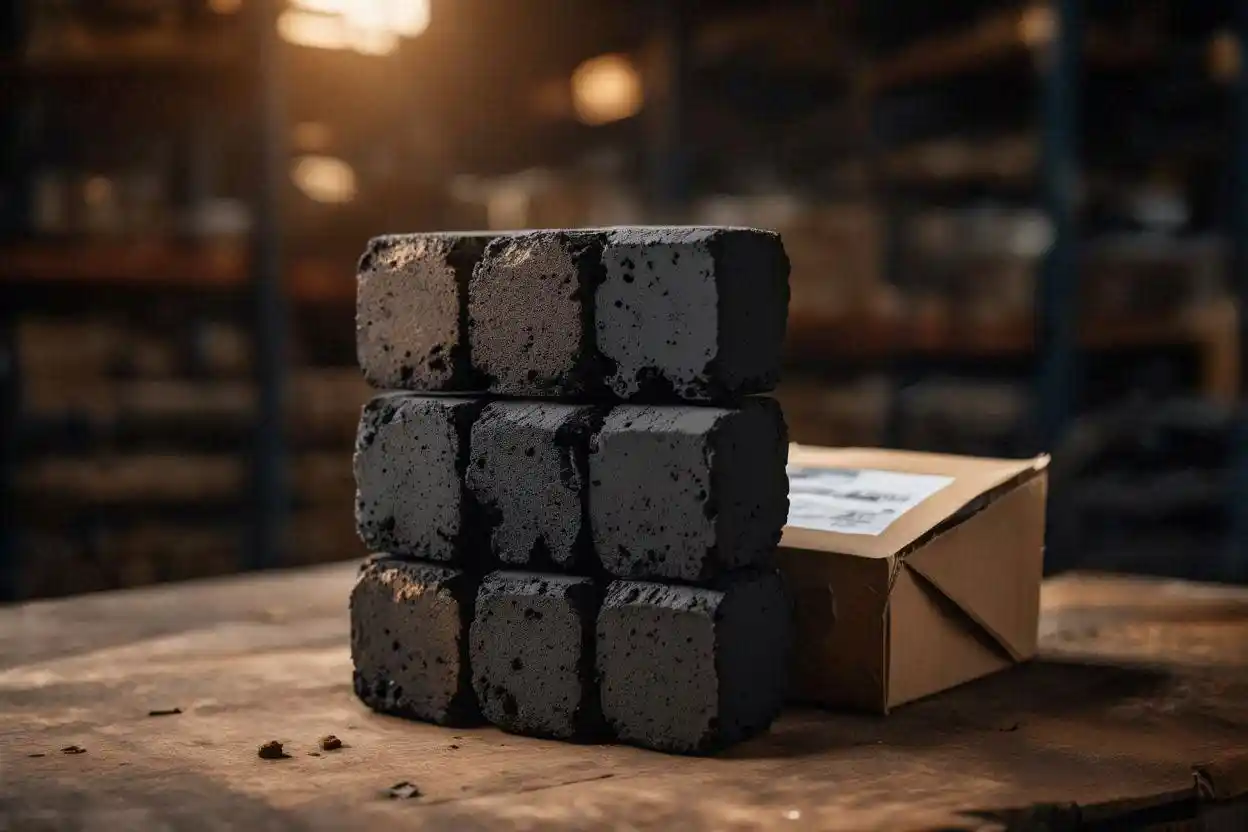
The global demand for export grade charcoal briquette products continues to grow steadily each year. This trend is driven by rising consumption from hookah lounges, barbecue industries, and food service businesses across Europe, the Middle East, and North America.
Understanding what makes a charcoal briquette export-worthy is essential. Whether you are a producer, distributor, or buyer, knowing the key standards helps you make better business decisions.
What Defines Export Grade Charcoal Briquettes?
Export grade charcoal briquette products must meet specific quality benchmarks that differ from domestic-use charcoal. These benchmarks cover several technical aspects that international buyers strictly evaluate before placing orders.
The most important parameters include moisture content, ash content, fixed carbon level, and calorific value. Products that pass these measurements consistently demonstrate superior combustion performance and longer burn duration.
Key Quality Standards for Export Charcoal Briquette Products
Meeting international quality standards is non-negotiable for producers targeting overseas markets. Most importing countries require compliance with specific certifications before allowing products to enter their market.
Here are the common standards and requirements for export grade charcoal briquette products:
- Fixed carbon content — minimum 75%, with premium grades reaching above 85%.
- Moisture content — should not exceed 8% to ensure efficient ignition.
- Ash content — kept below 5% for cleaner burning and less residue.
- Calorific value — ideally above 7,000 kcal/kg for high-performance use.
- Certifications — SGS, MSDS, and food-grade safety documentation are frequently required.
Furthermore, packaging standards also play a significant role. Export shipments typically require moisture-resistant packaging with clear product labeling in the buyer’s language.
Why Coconut Shell Briquettes Dominate Export Markets
Among all raw materials, coconut shell remains the top choice for producing export grade charcoal briquette products. Indonesia, the Philippines, and Sri Lanka are among the largest suppliers globally due to their abundant coconut resources.
Coconut shell briquettes naturally produce high fixed carbon and low ash content. These properties align perfectly with the demands of international buyers, particularly those in the shisha and barbecue sectors.
For a deeper reference on product selection, you can explore export quality hookah charcoal briquettes to understand the specific characteristics that premium buyers look for in today’s competitive market.
How to Successfully Export Charcoal Briquette Products
Breaking into the export market requires more than just producing good charcoal. Producers need to build a complete business system that supports international trade requirements.
First, establish consistent production quality. Buyers rely heavily on consistency across multiple orders. Even one substandard shipment can damage a long-term business relationship.
Second, prepare all necessary documentation. This includes certificates of analysis, phytosanitary certificates, and customs compliance paperwork. Working with a licensed export agent simplifies this process significantly.
Third, build your digital presence. Many international buyers now search for suppliers online before initiating contact. You can also find useful business references at dasetpublishing.com, a blog platform covering trade, business strategy, and product knowledge across multiple industries.
Conclusion
Export grade charcoal briquette products represent a significant opportunity for producers willing to meet international quality standards. From fixed carbon levels and moisture control to proper certification and packaging, every detail contributes to a product’s global competitiveness.
Coconut shell briquettes continue to lead the export segment due to their superior technical properties and sustainable sourcing. Producers who invest in consistent quality, proper documentation, and strong market presence will find themselves well-positioned to secure long-term overseas buyers.
Entering the export charcoal market is not an overnight process, but with the right preparation and commitment to quality, it becomes a highly rewarding business path. The demand is real, and the opportunity is there for those ready to meet it.


