Coconut briquettes have become a preferred fuel choice for BBQ restaurants, shisha lounges, and international distributors due to their long burn time, stable heat, and low ash content. But many buyers still ask: how are coconut briquettes made? Understanding the production process helps importers and wholesalers ensure they are sourcing high-quality products that meet global standards.
In this article, we will explain the complete manufacturing process of charcoal briquettes made from coconut shells, from raw material selection to final quality control.
Step 1: Selecting High-Quality Coconut Shells
The production process begins with carefully selecting mature coconut shells. Mature shells are dense and contain high levels of fixed carbon, making them ideal for charcoal production.
Only clean shells free from mold, dirt, or contamination are used. The quality of the raw material directly affects the calorific value, burn duration, and ash content of the final briquettes. High-grade charcoal briquettes made from coconut shells always start with strict raw material selection.
Step 2: Carbonization Process
The next stage is carbonization. Coconut shells are heated in a low-oxygen environment at temperatures typically ranging between 400°C and 600°C. This controlled heating process converts the shells into charcoal without burning them into ash.
Proper carbonization ensures:
-
- High fixed carbon content
- Low moisture levels
- Strong and durable charcoal structure
This stage is crucial in determining the performance and consistency of the final briquettes.
Step 3: Grinding and Mixing
After carbonization, the charcoal is cooled and ground into a fine powder. Uniform particle size is important to ensure consistent density and shape during briquette formation.
The powdered charcoal is then mixed with a natural binder, commonly food-grade tapioca starch. The ratio between charcoal and binder is carefully calibrated to maintain strong cohesion without compromising burning quality.
This step plays a key role in producing charcoal briquettes made from coconut shells that are solid, crack-resistant, and long-lasting.
Step 4: Briquette Molding and Pressing
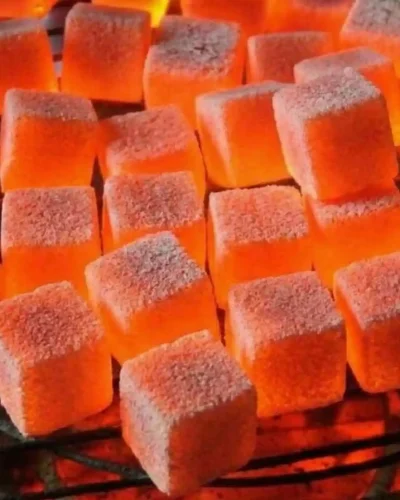
The mixture is compressed using high-pressure hydraulic machines to form uniform briquettes. Common shapes include cubes, hexagons, and finger-style briquettes.
High compression increases density, which enhances:
-
- Burn duration
- Heat stability
- Structural strength during transportation
Uniform shapes also improve packaging efficiency and ensure consistent airflow during burning.
Step 5: Drying and Quality Control
After pressing, the briquettes are dried in industrial ovens to reduce moisture content to below 8%. Proper drying prevents cracking, ensures easy ignition, and enhances durability during shipping.
Before export, strict quality control tests are conducted, including:
-
- Burn time testing
- Ash content measurement
- Drop resistance testing
- Moisture verification
Only briquettes that meet export-grade standards are approved for shipment to international buyers.
Why Production Quality Matters
Understanding how coconut briquettes are made helps buyers identify reliable suppliers. The combination of proper carbonization, precise mixing, high-pressure compression, and strict quality control determines whether the briquettes deliver consistent heat, minimal smoke, and long burn performance.
High-quality charcoal briquettes made from coconut shells are not simply produced they are engineered through careful processes and professional expertise.
Ready to Source Premium Coconut Briquettes?
If you are looking for reliable, export-grade coconut briquettes for your business, make sure you work with experienced manufacturers who follow strict production standards.
Click the link chillinks.com below to explore our premium coconut briquettes and secure a consistent, high-quality supply for your market today.
Choosing the right supplier ensures not only better performance but also long-term business reliability and customer satisfaction.