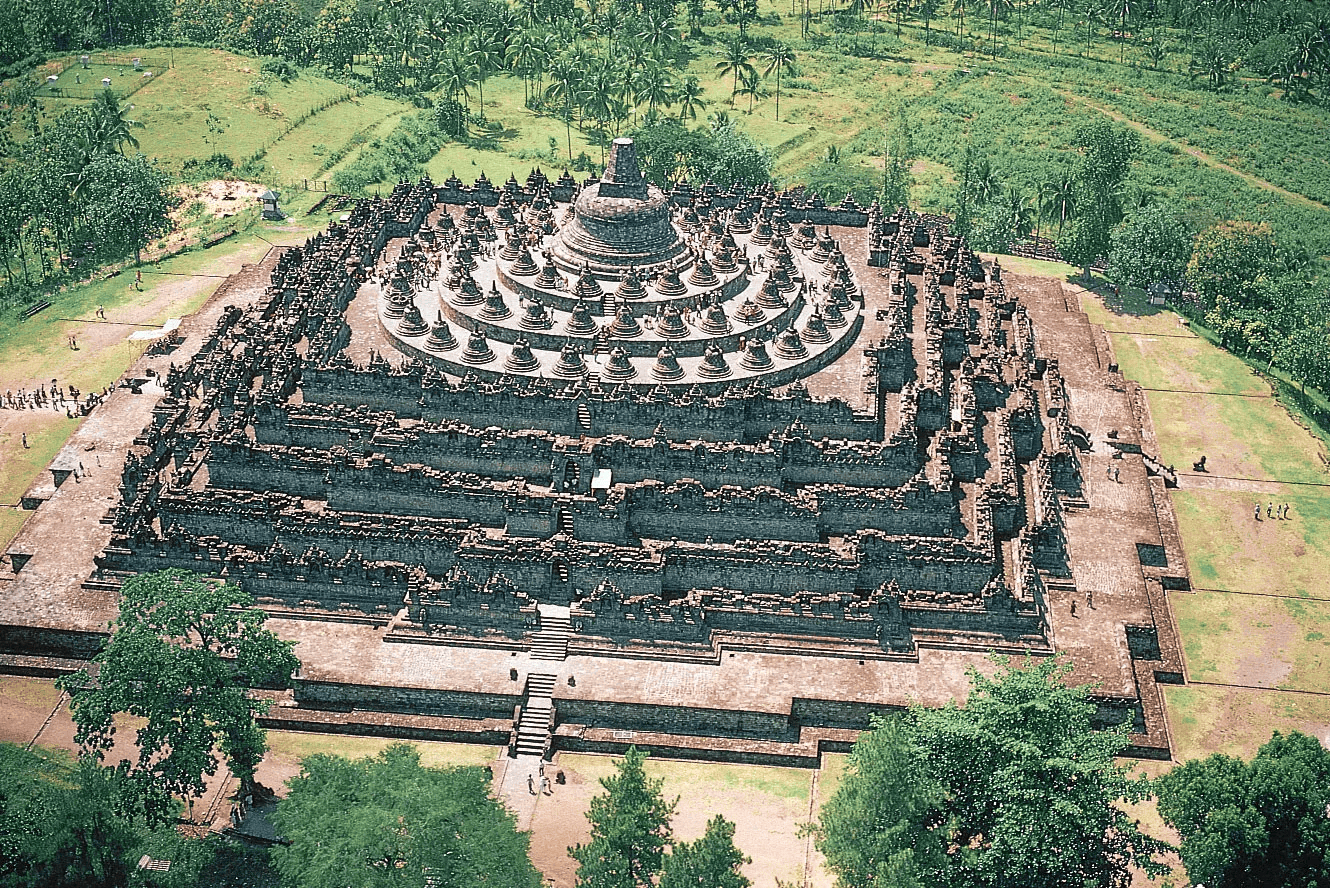
Borobudur became one of the greatest Buddhist monuments in Southeast Asia, yet people eventually stopped using it. The question Why Was Borobudur Abandoned has no single proven answer. Historians point to political change, volcanic activity, and shifting religious patterns. The available evidence suggests that several factors may have worked together over centuries.
When Did Borobudur Become Abandoned?
UNESCO states that people used Borobudur as a Buddhist temple from its construction until sometime between the 10th and 15th centuries. This wide range shows how little direct evidence survives.
The temple did not disappear overnight. Religious activity likely declined gradually, while vegetation and natural deposits covered more of the monument. By the time Europeans documented Borobudur in the nineteenth century, dense growth surrounded much of the site.
For more background on its long history, read our guide to important facts about Borobudur Temple. It explains the monument’s architecture, Buddhist meaning, construction, and rediscovery.
Did Political Power Move Away from Central Java?
One major theory focuses on the political shift from Central Java to East Java. The Mataram court moved east during the early tenth century. That change reduced the political importance of the Kedu region, where Borobudur stands.
Royal support mattered for large religious centers. When rulers, officials, and communities shifted toward another region, temples could lose funding and regular maintenance.
This theory does not prove that political change alone caused Borobudur’s abandonment. However, it provides important historical context for the decline of major Central Javanese monuments.
Did Mount Merapi Cause the Abandonment?
Volcanic activity offers another possible explanation. Mount Merapi has shaped Central Java for centuries. Large eruptions can damage farmland, disrupt settlements, and cover landscapes with ash.
Indonesia’s official tourism information links a major Merapi eruption around 1006 with volcanic deposits around Borobudur. Researchers, however, continue to debate how directly volcanic events caused the regional shift.
It is therefore safer to see eruptions as a possible contributing factor. Environmental disruption may have encouraged communities to move or made temple maintenance more difficult.
Did Religious Change Play a Role?
Java’s religious landscape also changed over time. Hindu and Buddhist kingdoms remained influential for centuries after Borobudur’s construction. Later, Islamic states expanded across Java from around the thirteenth century onward.
This religious transition cannot fully explain Borobudur’s earliest decline because the temple may have lost importance much earlier. However, it may help explain why large-scale Buddhist worship did not return for many centuries.
Borobudur survived physically even as its original ritual role faded.
How Was Borobudur Rediscovered?
Borobudur returned to wider attention in 1814 during British rule in Java. Thomas Stamford Raffles received reports about a large ancient monument near Magelang and ordered an investigation. H. C. Cornelius led workers who cleared vegetation and exposed more of the structure.
Later conservation and restoration projects helped protect the monument. UNESCO supported a major restoration from 1973 to 1983.
Travelers who want to explore this history in person can choose a private Borobudur tour from Yogyakarta. A local guide can connect the monument’s architecture with its abandonment, rediscovery, and restoration.
Conclusion
So, Why Was Borobudur Abandoned? Historians cannot point to one confirmed cause. Historians often link Borobudur’s decline to political changes, volcanic activity, reduced royal support, and later religious developments.
The evidence suggests a gradual decline rather than one sudden event. Understanding that uncertainty makes Borobudur’s survival even more remarkable. The monument endured centuries of neglect before rediscovery and modern conservation brought it back into public and religious life.